







































































































































































5 Simple Home Exercises for Hypothyroidism: Safe Ways to Stay Active
Author: RVLNSV PRASAD
Updated On: October 2026
About Us
Author Bio
Editorial Policy
Contact Us

Introduction
Living with hypothyroidism can make everyday activities feel more difficult. You may experience fatigue, muscle aches, constipation, cold sensitivity, or unexplained weight changes. When your energy is low, even starting a short workout can seem like a challenge.
The good news is that you do not need an expensive gym membership or an intense workout routine to begin moving more. Walking around your home, practicing gentle stretches, performing supported strength exercises, and following a manageable activity schedule can help you build fitness at a pace that suits you.
However, there is an important distinction: exercise supports overall health, but it does not cure hypothyroidism or replace prescribed thyroid hormone treatment. Hypothyroidism occurs when the thyroid gland does not produce enough thyroid hormone. The National Institute of Diabetes and Digestive and Kidney Diseases (NIDDK) explains that treatment commonly involves levothyroxine, with follow-up blood tests to help determine the appropriate dose.
This guide explores five home exercises for hypothyroidism, how to start safely, how to adapt activity when fatigue is a problem, and how to approach weight management without unrealistic expectations.
Quick Answer: What Are the Best Home Exercises for Hypothyroidism?
Walking, gentle yoga, stretching, light strength training, and slow breathing exercises are practical options for many people who want to become more active at home.
Start with short sessions and comfortable movements. Increase duration gradually as your fitness and energy improve. If your hypothyroidism is newly diagnosed, untreated, poorly controlled, or causing significant symptoms, speak with your healthcare professional before beginning a new exercise routine.
Exercise may help improve fitness, preserve muscle, support mood, and contribute to weight management. It cannot reliably correct thyroid hormone levels or guarantee weight loss on its own.
Key Takeaways
- Check that your thyroid condition is being managed. Exercise is not a substitute for diagnosis, prescribed medication, or thyroid blood tests.
- Begin at a manageable level. Short, comfortable sessions can be a useful starting point when you have been inactive.
- Combine movement types. Walking supports aerobic fitness, while strength training helps maintain muscle and functional ability.
- Adapt to fatigue. Shorten a session or rest when needed rather than forcing yourself through severe symptoms.
- Measure more than body weight. Track activity consistency, strength, walking tolerance, and everyday function.
- Seek medical advice for concerning symptoms. Chest pain, fainting, unusual breathlessness, or severe weakness should not be ignored.
Why Exercise Matters When You Have Hypothyroidism
Thyroid hormones influence how the body uses energy and affect several organs, including the heart. When thyroid hormone levels are too low, people may experience fatigue, muscle or joint discomfort, cold intolerance, constipation, and weight gain.
The NIDDK’s overview of hypothyroidism explains that these symptoms vary between individuals and that diagnosis requires appropriate medical evaluation. Fatigue and weight gain can also have other causes, so they should not automatically be attributed to the thyroid.
Once your condition is appropriately managed, physical activity can be part of your overall health plan.
What exercise can realistically do
Regular movement can help improve cardiovascular fitness, muscle strength, balance, mood, and physical function. It may also contribute to maintaining or reducing body weight when combined with suitable eating habits and other lifestyle factors.
The CDC’s adult physical activity guidance recommends at least 150 minutes of moderate-intensity aerobic activity each week, along with muscle-strengthening activities on at least two days. These are general recommendations for adults, not a requirement that someone with severe fatigue must immediately achieve.
What exercise cannot do
Exercise cannot replace thyroid hormone when medication is needed. It should not be presented as a way to restore thyroid function, balance thyroid hormones, or guarantee weight loss.
The American Thyroid Association’s hypothyroidism information explains the role of medical treatment. If symptoms remain despite taking prescribed medication, discuss them with your healthcare professional rather than simply increasing workout intensity.
Before You Start: Is Home Exercise Appropriate for You?
The safest starting point depends on your symptoms, treatment status, other health conditions, and current fitness.
| Situation | Practical approach |
|---|---|
| Hypothyroidism is treated, and symptoms are stable. | Start with an activity level suited to your current fitness. |
| You have been inactive for a long time. | Begin with short sessions and build gradually. |
| You have significant fatigue or muscle weakness | Seek medical advice about an appropriate starting level. |
| You have newly diagnosed or poorly controlled hypothyroidism. | Discuss exercise timing and intensity with your healthcare professional. |
| You experience chest pain, fainting, or unusual breathlessness. | Stop exercising and seek urgent medical assessment as appropriate. |
The Cleveland Clinic’s guidance on exercise and uncontrolled thyroid conditions emphasizes that significant, uncontrolled thyroid disease can affect exercise safety. Do not assume that every low-impact workout is automatically safe simply because it is gentle.
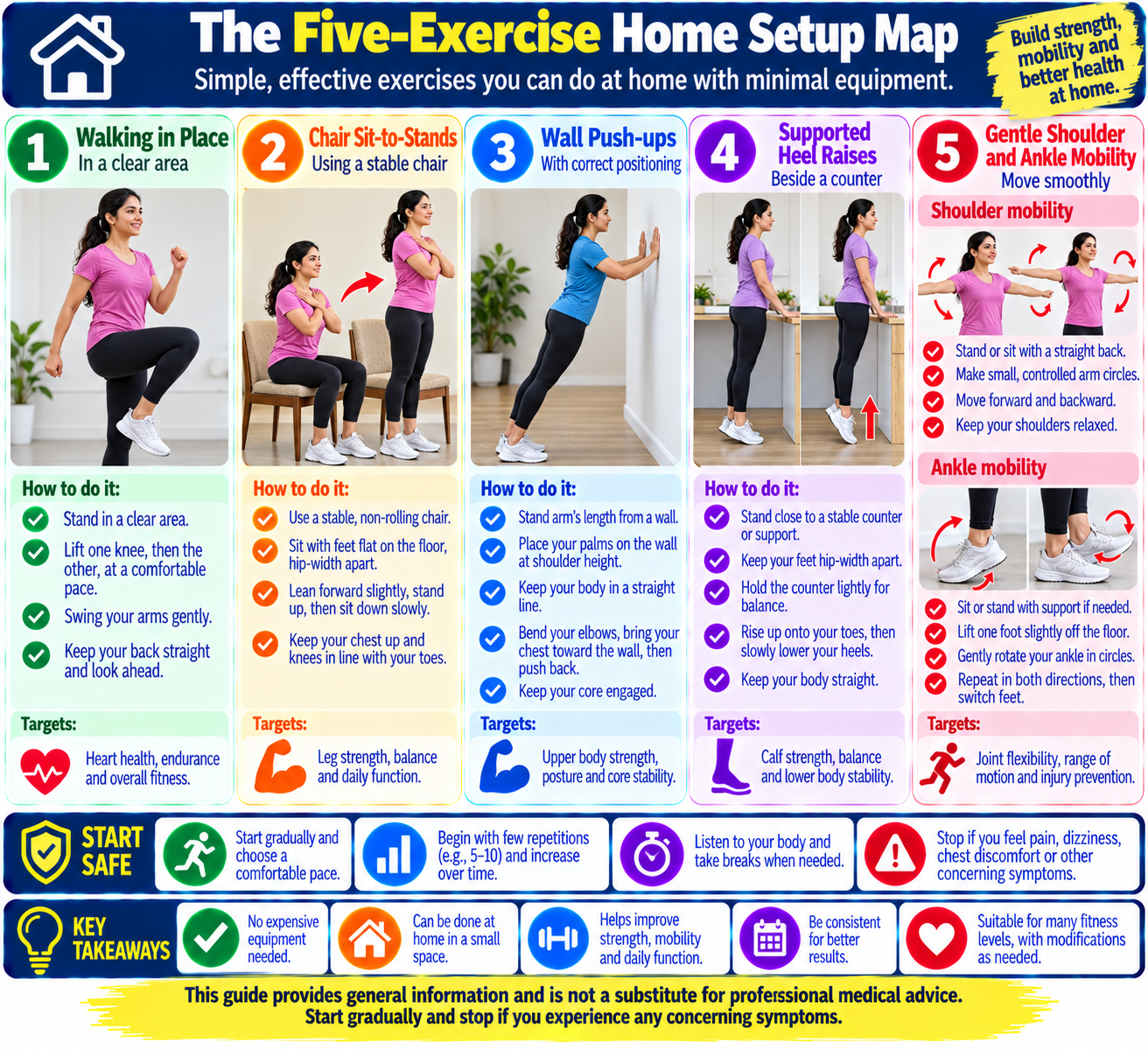
1. Walking: A Practical Starting Point
Walking is accessible, requires little equipment, and can be adapted to different fitness levels. You can walk outdoors, around your home, or in a suitable indoor space.
For people with hypothyroidism, walking can be a useful way to build physical activity gradually. It supports cardiovascular fitness and contributes to overall energy expenditure, although the effect on weight varies between individuals.
How to do it at home
- Choose a clear, stable walking route.
- Begin at a comfortable pace for around five to ten minutes if that feels manageable.
- Keep your shoulders relaxed and breathe normally.
- Slow down or take a break if you feel unusually tired.
- Increase the duration gradually as your tolerance improves.
The starting duration is an example, not a medical prescription. If five minutes is too much, start with a shorter period after discussing significant limitations with your healthcare professional.
A practical tip: Use short walking breaks.
You do not have to complete all your activity in one session. A few short walks spread throughout the day may be easier to manage than a long workout.
The CDC’s physical activity guidance explains that activity can be accumulated in smaller periods and that some movement is better than none.
What to track: Record how long you walk comfortably, how difficult the effort feels, and whether you recover normally afterward. These measures can be more informative than expecting immediate changes on the scale.
2. Gentle Yoga: Combine Movement With Relaxation
Gentle yoga can combine controlled movement, balance, flexibility, and breathing. It may be useful if you prefer a slower activity that can be adapted to your abilities.
However, claims that yoga directly balances thyroid hormones or cures hypothyroidism are not established by the fact that a person feels calmer or more flexible after practice.
How to begin
Choose simple movements that do not cause pain or dizziness. Seated stretches, gentle shoulder movements, and comfortable standing poses may be suitable starting options for some people.
- Use a stable chair or wall for support if needed.
- Avoid forcing your neck into extreme positions.
- Move slowly between poses.
- Breathe normally instead of holding your breath.
- Stop if a pose causes pain, dizziness, or unusual discomfort.
If you have balance problems, significant weakness, osteoporosis, or another condition affecting movement, ask a qualified professional about suitable modifications.
Why it may be useful
Yoga can provide a structured opportunity to move and relax. It may also help some people develop a regular activity habit.
Its role should be understood as part of a broader routine, not as a replacement for thyroid treatment. For general activity recommendations, see the CDC’s guidance for adults.
3. Gentle Stretching: Improve Comfort and Mobility
Stretching can help maintain flexibility and make everyday movements feel more comfortable. It may be useful if you experience stiffness or spend much of the day sitting.
Stretching is not a direct treatment for low thyroid hormone levels, and it should not be expected to eliminate persistent muscle pain caused by an underlying medical problem.
A simple home stretching routine
Try these movements slowly, provided they are comfortable for you:
- Shoulder rolls: Move your shoulders gently forward and backward.
- Seated ankle movements: Point and flex your feet while sitting comfortably.
- Calf stretch: Place your hands against a wall, move one foot back, and gently stretch the rear calf without forcing the position.
- Gentle chest opening: Sit or stand upright and move your shoulders back comfortably.
- Seated leg extension: Straighten one knee gently, pause briefly, and lower the foot.
Start with a few comfortable repetitions or short holds. You do not need to stretch deeply to make the routine worthwhile.
A useful habit: Stretch after sitting
If you spend long periods working at a desk, brief movement breaks can help you interrupt prolonged sitting. Stretching may be one option, but standing up, walking a little, or changing position can also be useful.
For additional movement ideas, see 8 Lower Back Stretches That Actually Work for Pain and Mobility.
4. Light Strength Training: Help Maintain Muscle
Strength training is an important part of a balanced fitness routine. It helps develop or maintain muscle strength and supports everyday tasks such as climbing stairs, carrying shopping, and standing up from a chair.
People managing hypothyroidism may find it useful to include resistance exercise once their condition and symptoms allow. However, strength training does not directly correct a thyroid hormone deficiency, and muscle-building results vary with training, nutrition, recovery, and health status.
Three beginner-friendly exercises
A. Chair sit-to-stand
- Sit on a stable chair with your feet placed comfortably on the floor.
- Lean forward slightly and stand up using your legs.
- Sit back down slowly with control.
- Use your hands for support if necessary.
Start with a few repetitions. Stop if you feel dizzy, unstable, or unusually weak.
B. Wall push-ups
- Stand facing a wall at a comfortable distance.
- Place your hands on the wall around shoulder height.
- Bend your elbows and move your chest toward the wall.
- Push gently back to the starting position.
Keep your body aligned and use a distance that feels manageable.
C. Supported heel raises
- Stand behind a stable chair or near a counter.
- Hold the support lightly.
- Raise your heels while keeping your balance.
- Lower them slowly.
This movement can help work the calf muscles. Avoid it if you have pain or balance problems that make it unsuitable.
How often should you strength train?
The CDC’s adult activity recommendations include muscle-strengthening activities on at least two days each week for adults. If you are new to exercise, begin with an appropriate amount and build gradually rather than treating the recommendation as a demand to do more than you can manage.
Allow recovery between challenging sessions. If weakness or fatigue is persistent, ask your clinician whether additional assessment is needed before increasing resistance.
5. Slow Breathing Exercises: Support Relaxation, Not Thyroid Treatment
Slow, comfortable breathing can be a simple way to pause during a stressful day or prepare for sleep. Unlike walking and strength training, it is not a substitute for aerobic or muscle-strengthening activity.
It is also important to avoid claims that breathing exercises increase oxygen to a level that cures fatigue or restores thyroid hormone balance. Those claims go beyond what this practice can reliably deliver.
How to practice comfortably
- Sit in a supported position.
- Relax your shoulders and jaw.
- Breathe gently through your nose if comfortable.
- Let your breathing slow naturally without forcing deep breaths.
- Continue for a minute or two, then return to normal breathing.
Stop if you feel light-headed or uncomfortable. Do not hold your breath for extended periods.
When breathing exercises may fit your routine
You could use a short breathing practice after work, before bedtime, or between activities. Treat it as a relaxation habit rather than a way to burn significant calories or change thyroid function.
A Simple Weekly Home Exercise Plan
A useful plan balances activity with recovery. It should be adjusted to your medical status, symptoms, and fitness level.
| Day | Suggested activity | Beginner option |
|---|---|---|
| Monday | Walking | A short, comfortable walk |
| Tuesday | Light strength training | Chair sit-to-stands and wall push-ups |
| Wednesday | Gentle yoga or stretching | A few comfortable movements |
| Thursday | Walking | Repeat Monday’s duration if tolerated. |
| Friday | Light strength training | Repeat a familiar routine. |
| Saturday | Preferred gentle activity | Walking, mobility, or yoga |
| Sunday | Rest or comfortable movement | Take a break if you need one. |
This is an example rather than a mandatory seven-day schedule. You can have more rest days, reduce the session length, or repeat an activity you tolerate well.
How to progress without overdoing it
Change one element at a time. For example, add a few minutes to a comfortable walk before increasing its pace. With strength exercises, improve your technique and control before adding repetitions.
If your symptoms worsen, reduce the workload and consider medical advice. Persistent fatigue should not be treated as evidence that you need to push harder.
How Exercise Can Support Weight Management With Hypothyroidism
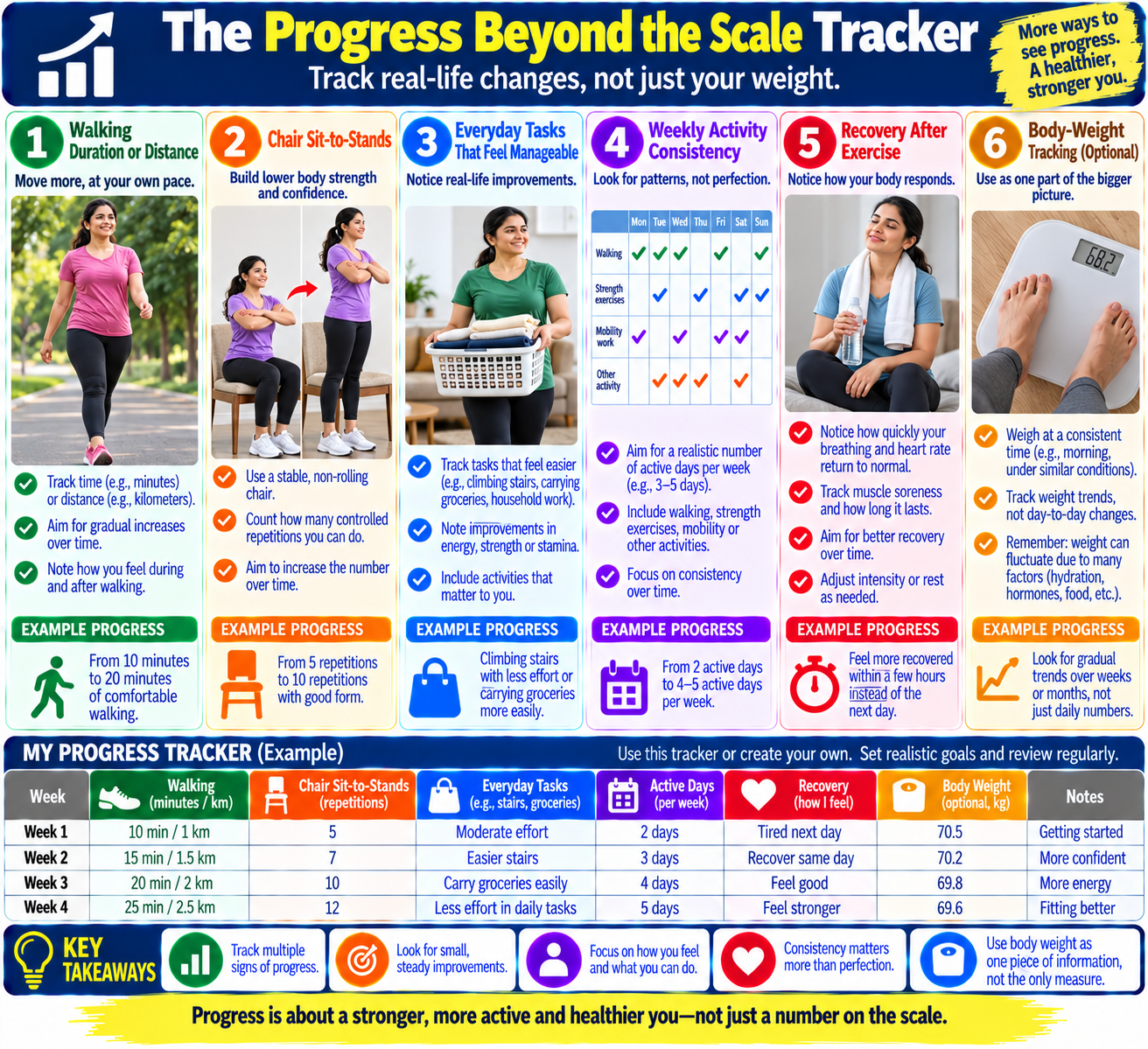
Weight management can be frustrating when fatigue, appetite, activity levels, or other health factors change. Exercise can contribute to energy expenditure, maintain muscle, and improve fitness, but it does not guarantee weight loss.
The American Thyroid Association’s information on thyroid and weight explains that hypothyroidism-related weight gain is often modest and can partly reflect salt and water retention. Weight changes should not automatically be attributed entirely to thyroid function.
Focus on several factors together.
1. Medical management
If you have hypothyroidism, follow your clinician’s treatment plan. Do not change your medication dose to influence weight or exercise performance.
2. Food quality and adequate nutrition
Choose meals that provide suitable sources of protein, fiber-rich foods, fruits, vegetables, and other nutrients. Avoid severe calorie restriction, especially when fatigue is already making daily activities difficult.
3. Regular movement
Build a routine that includes aerobic activity and strength training as tolerated. The amount needed for weight change differs widely between people.
4. Recovery and sleep
Allow adequate rest and seek advice if fatigue remains severe despite following your treatment plan.
5. Realistic progress measures
Consider walking duration, strength, daily function, and consistency alongside body weight. These measures can show improvements that a scale does not capture.
For further reading, see Best 8 Weight Loss Exercises and Best Weight Loss Nutrition.
A Practical Adjustment Method for Low-Energy Days
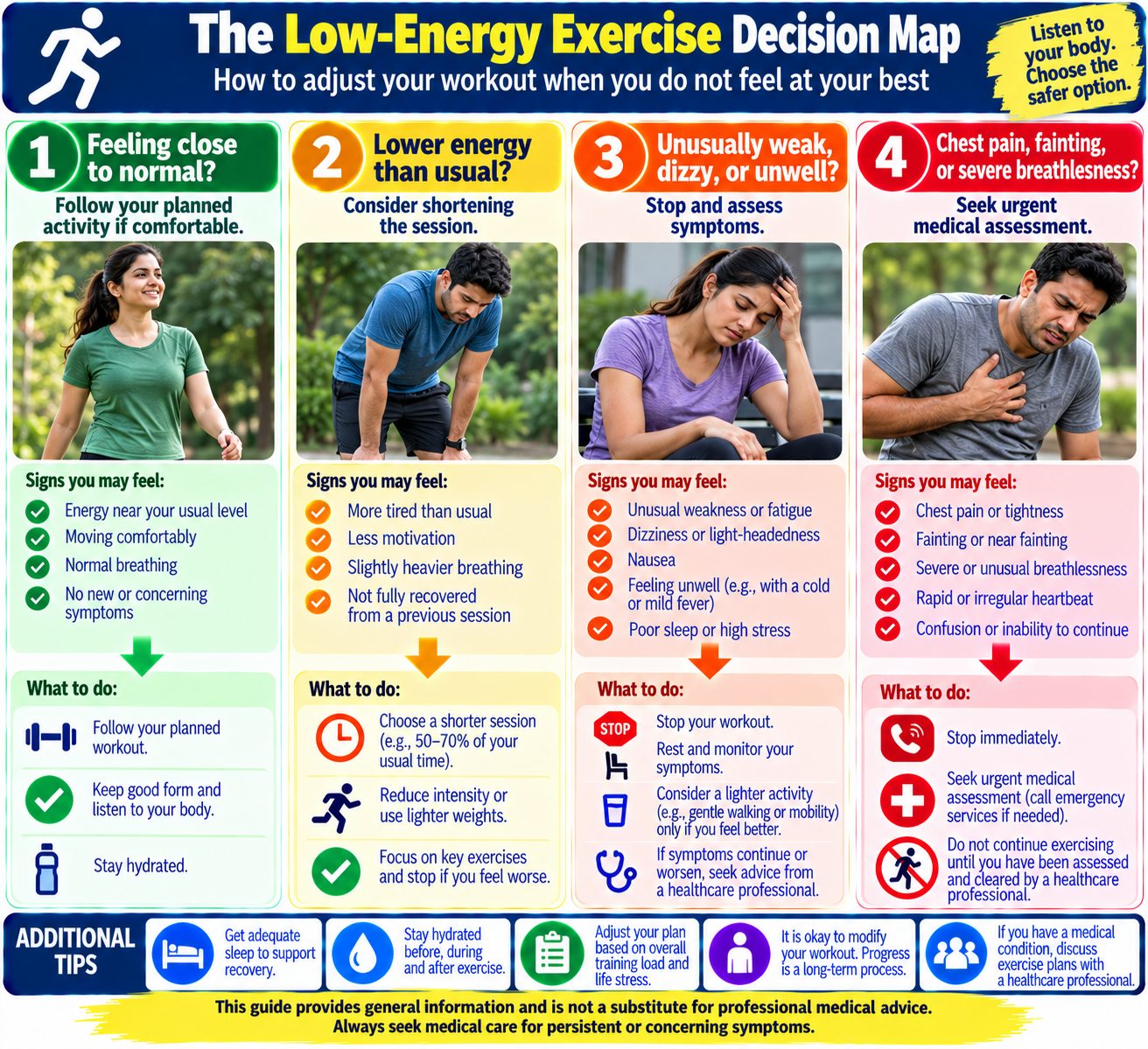
One useful way to make exercise more sustainable is to have three versions of your routine. This is a planning strategy, not a medical treatment.
| How you feel | Possible approach |
|---|---|
| Energy is close to your usual level. | Complete your planned walk or strength routine if it feels comfortable. |
| Energy is lower than usual. | Shorten the session, slow the pace, or choose gentle mobility. |
| You feel unusually weak, dizzy, unwell, or short of breath. | Stop and assess what is happening; seek medical advice when appropriate |
The purpose is to avoid treating every day as a test of willpower. You can adjust your activity while still maintaining a long-term habit.
If fatigue is severe, new, or persistent, do not assume that a shorter workout is the only answer. Hypothyroidism treatment, medication timing, anemia, sleep problems, and other conditions may need review by a healthcare professional.
Common Exercise Mistakes to Avoid
Expecting exercise to correct thyroid hormone levels
Exercise supports overall health but does not replace prescribed thyroid medication. Continue medical monitoring as directed.
Increasing intensity too quickly
Doing too much too soon can lead to excessive soreness, fatigue, or injury. Increase duration or difficulty gradually.
Exercising through concerning symptoms
Chest pain, fainting, unusual breathlessness, or marked weakness are not signs that a workout is working. Stop and seek appropriate medical assessment.
Believing that sweat means more fat loss
Sweating primarily helps regulate body temperature. It is not a reliable measure of fat loss or workout effectiveness.
Using weight alone to judge progress
Fitness, muscle strength, walking tolerance, and daily function can improve even when the scale changes little.
Following a strict routine despite changing symptoms
A schedule should guide your activity, not force you to ignore how you feel. Adjust the plan when necessary and investigate persistent symptoms.
Taking thyroid supplements without advice
Avoid self-treating hypothyroidism with iodine, kelp, or products marketed as thyroid boosters. The NIDDK’s guidance on hypothyroidism and nutrition warns that excessive iodine can cause or worsen thyroid problems in some people. Supplements should be discussed with your healthcare professional.
What Current Guidance Says About Exercise and Hypothyroidism
Current public-health guidance supports regular physical activity for adults, including people with chronic health conditions when activity is appropriate for their situation. The CDC’s updated guidance on adding physical activity as an adult, last updated in December 2025, emphasizes that activity can be divided into smaller periods and that any amount of movement is better than none.
However, these general recommendations are not a thyroid-specific exercise prescription. They do not establish that one particular home exercise will normalize thyroid hormone levels or produce a predictable amount of weight loss.
Clinical guidance also emphasizes diagnosing and treating hypothyroidism appropriately. The NIDDK explains how thyroid blood tests and levothyroxine treatment are used. Exercise can complement that care, but it should not delay evaluation when symptoms suggest that treatment needs review.
The most useful approach is therefore to combine medical management with gradual, individualized physical activity. Research and public-health guidance support the general benefits of movement, while the effects of a specific exercise routine on an individual with hypothyroidism depend on health status, treatment, fitness, and other factors.
When Should You Speak With a Healthcare Professional?
Seek medical advice before starting a new routine if your hypothyroidism is untreated, poorly controlled, or associated with significant symptoms. You should also ask for guidance if you have heart disease, severe muscle weakness, substantial balance problems, or another condition that affects exercise safety.
Stop exercising and seek urgent assessment if you experience chest pain, fainting, severe or unusual breathlessness, or sudden severe weakness.
Arrange a medical review if fatigue, weight changes, muscle pain, or other symptoms persist despite taking medication as prescribed. A clinician can assess whether thyroid tests, medication adjustments, or evaluation for another cause may be appropriate.
Frequently Asked Questions
What are the best home exercises for hypothyroidism?
Walking, gentle yoga, stretching, light strength training, and slow breathing exercises are practical options for many people. Choose activities based on your symptoms, fitness, and medical advice.
Can exercise cure hypothyroidism?
No. Exercise can support general health and physical function, but it does not replace thyroid hormone treatment when prescribed. Follow your healthcare professional’s treatment and monitoring plan.
Can I lose weight by exercising at home with hypothyroidism?
Home exercise can contribute to weight management, but results depend on several factors, including thyroid treatment, nutrition, activity, sleep, and individual health. No five-exercise routine guarantees weight loss.
How long should I exercise each day?
There is no single starting duration for everyone. Begin with a manageable amount and increase gradually. The CDC’s general adult recommendation is at least 150 minutes of moderate-intensity aerobic activity each week, plus muscle-strengthening activity on two days, when appropriate for the individual.
Is yoga safe for hypothyroidism?
Gentle yoga may suit many people whose condition is stable, but it is not automatically safe for everyone. Modify poses to your abilities and seek medical advice if your symptoms are significant or your condition is poorly controlled.
Should I exercise when I feel very tired?
Mild tiredness may call for a shorter, easier session, but severe, unusual, or persistent fatigue deserves attention. If you feel dizzy, faint, unusually weak, or short of breath, stop and seek appropriate medical advice.
Do I need equipment for home exercises?
Not necessarily. Walking, supported stretches, chair sit-to-stands, and wall push-ups can be done with little or no equipment. Use stable furniture and a clear exercise space to reduce the risk of falls.
Should I change my thyroid medication if exercise is not helping me lose weight?
No. Never change your thyroid medication dose to pursue weight loss or improve exercise results without your prescriber’s guidance. Discuss persistent symptoms or weight concerns with your healthcare professional.
Conclusion: Build a Routine That Fits Your Health
Home exercises for hypothyroidism can help you become more active without requiring intense workouts or expensive equipment. Walking, gentle yoga, stretching, light strength training, and comfortable breathing exercises offer different ways to begin.
Start with movements you can perform safely, increase activity gradually, and allow time for recovery. Track practical improvements such as strength, walking tolerance, and everyday function rather than judging your progress only by weight.
Most importantly, keep exercise in its proper role. It supports general health and can contribute to weight management, but it cannot replace thyroid treatment. If fatigue or other symptoms persist, work with your healthcare professional to determine whether your treatment or overall health needs further review.
Author Note
Author: RVLNSV PRASAD
This article provides general, evidence-informed guidance about adapting physical activity for people with hypothyroidism. Individual needs differ, and exercise should be adjusted according to symptoms, fitness, treatment status, and other medical conditions.
Personal-experience note: If you have personally used walking or another exercise to build a routine, add a brief, truthful account of what you did and what you noticed. Do not claim that exercise corrected your thyroid levels or caused a specific amount of weight loss unless that conclusion is supported by appropriate evidence.
Medical Disclaimer
This article is for general educational purposes only. It is not a substitute for professional medical advice, diagnosis, or treatment. Hypothyroidism requires appropriate medical evaluation and may require prescribed thyroid hormone replacement. Do not stop, change, or adjust medication based on this article. Seek individualized advice from a qualified healthcare professional if you have significant symptoms or are unsure which activities are appropriate.
Fitness Disclaimer
Exercise should be adapted to your current fitness, health status, and physical abilities. Start gradually if you are inactive. Stop if you experience chest pain, fainting, severe weakness, or unusual breathlessness, and seek appropriate medical assessment. People with untreated or poorly controlled thyroid disease should consult a healthcare professional before beginning a new exercise program.
Sources
- National Institute of Diabetes and Digestive and Kidney Diseases — Hypothyroidism
- American Thyroid Association — Hypothyroidism
- American Thyroid Association — Thyroid and Weight
- American Thyroid Association — Thyroid Hormone Treatment
- Centers for Disease Control and Prevention — Adult Physical Activity Guidelines
- Centers for Disease Control and Prevention — Adding Physical Activity as an Adult
- Cleveland Clinic — Exercise and Diet Risks Associated With Uncontrolled Thyroid Conditions
Related posts
- 8 Easy Breast Lift Exercises
- 6 Home Exercises for Overall Fitness and Flexibility: A Comprehensive Guide
- Home
- Category
- Best 8 Weight Loss Exercises
- Chest Workouts Without Equipment: Best 12 Moves to Build Muscle at Home
- 8 Lower Back Stretches That Actually Work for Pain and Mobility
- HIIT Workouts for Beginners: How to Start and See Results Fast











[…] 5 Simple Home Exercises for Hypothyroidism to Lose Weight […]